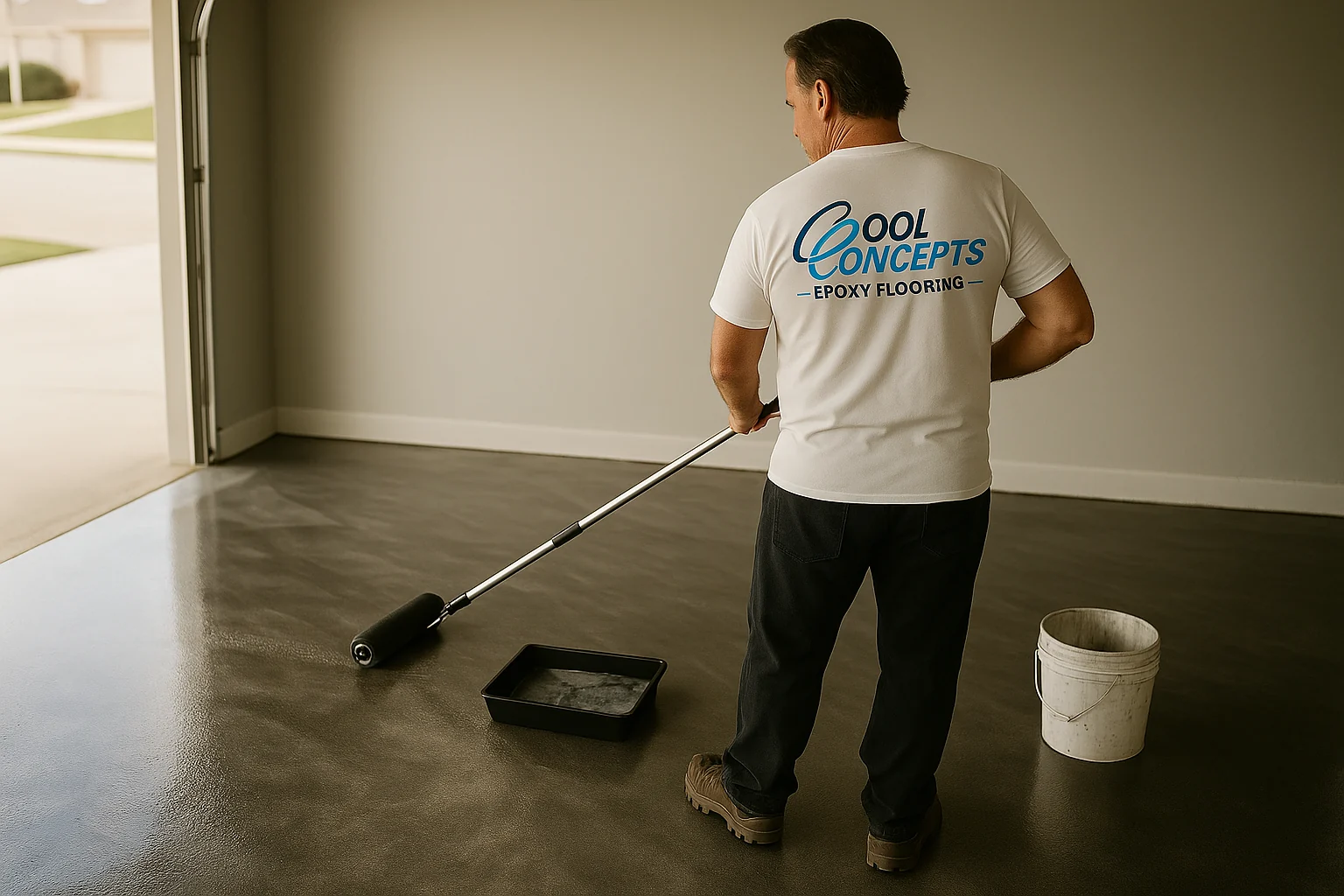
Four finishes cover nearly every epoxy floor poured in Pinellas: flake for grip and forgiveness, metallic for drama, quartz for punishment, and solid color for plain utility. What decides between them is how the room gets used and how much daylight reaches it — not the photo that caught your eye.
St. Petersburg did not get the name the Sunshine City by accident. Between 9 February 1967 and 17 March 1969 the city logged 768 consecutive sunny days, and the streak still stands as a world record. That is worth knowing before you choose a floor, because light is what a decorative coating lives or dies by. Sun is what pulls the depth out of a metallic pour, and sun is what turns a cheap clear coat yellow. Work out how much of it your room actually gets before you settle on a color.
The word "epoxy" hides how far apart these finishes really are. A chip floor in a Seminole garage and a poured metallic in a Historic Old Northeast dining room come from the same chemistry and share almost nothing else — not the look, not the wear, not the price. What follows is each of the four in plain terms: what it is, what it is good at, where it belongs, and what it runs.
We install all four across Pinellas, from Historic Kenwood and Snell Isle out to Tierra Verde and north through Largo, Seminole and Clearwater — garage floors, home interiors and shop floors alike. If you would rather talk it through than read it, call (727) 292-1860.
Four Finishes, Four Priorities
Every one of these is a trade. One buys traction, one buys looks, one buys toughness, one buys a low number. Here is the whole map before the detail.
- Flake / chip — texture, camouflage and value. Speckled, gritty underfoot, forgiving of a slab that has seen some life. The default garage floor here. $5 to $9 per square foot.
- Metallic — the one people photograph. Pigment worked by hand through a clear pour, producing movement, depth and a mirror gloss. Interiors and showrooms. $9 to $14 per square foot.
- Quartz — what you specify when the floor has to survive something. Graded quartz granules build genuine thickness and standing traction. $10 to $14 per square foot.
- Solid color — one color, no decoration, easy to wipe. Function first, and nothing more. $4 to $7 per square foot.
The detail below is really about what each of those trades feels like to live with.
Flake / Chip: The Forgiving One
Flake is what most St. Petersburg homeowners end up with, and the reason is rarely the look. It is that flake forgives things.
How It Goes Down
The slab is diamond ground to open the concrete, then a pigmented base coat is laid. While that base is still wet, the installer throws vinyl chips across it by hand until the color underneath disappears — done properly this is a continuous chip layer, not a sprinkle. After it cures, the raised chip edges are scraped back flat and a clear topcoat is rolled over the whole thing. On a St. Petersburg floor that clear coat should be a UV-stable polyaspartic, for reasons the last section of this guide gets into.
Why "Forgiving" Counts for So Much Here
The 2024 American Community Survey puts 67.7% of St. Petersburg housing units in buildings that went up before 1980. A slab that has been under a house for forty or fifty years has a history to it: saw cuts, patched trenches, a spalled corner where a water heater once stood, a hairline crack from a settled footing. Flake buries all of it. The chip layer scatters light in every direction, so the eye reads texture and never gets around to reading the flaw underneath. A mirror finish over that same slab does the reverse — gloss advertises every ripple it sits on.
Where It Belongs
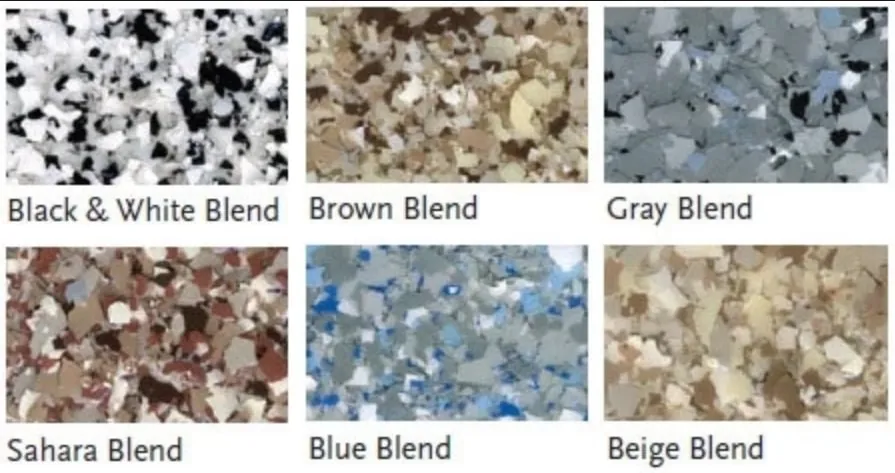
Garages, workshops, laundry rooms, covered lanais, storage bays — anywhere shoes, tires and dropped tools land. At $5 to $9 per square foot it is also the best value we install. Chip blends run from quiet grays and tans that read almost solid from across the room to high-contrast mixes with copper, blue or red in them, so "forgiving" does not have to mean "dull."
Metallic: The Hand-Worked Pour
Metallic is not a color you order, it is a technique someone performs. It is also the only finish on this list where the weather on installation morning changes what you end up with.
How the Effect Is Made
Reflective pigment is dispersed through a clear resin, poured out, and then kept moving while it is still liquid — spread with a squeegee, cut with a roller, opened up with air, sometimes worked again as it thickens. The pigment separates and stacks while the resin sets. What you are left with is not a printed pattern; it is a record of how the material moved across your slab. That is why no installer can reproduce a metallic floor exactly, including the one who poured the last one.
Why the Pour Gets Scheduled by the Hour
A metallic pour has a long open time and a wet, exposed surface, which makes it the finish most at the mercy of ambient conditions. Two numbers govern it. Relative humidity in St. Petersburg runs near 88% at 7 a.m. and falls to roughly 57% by late afternoon, while manufacturers cap application at about 85% RH — so the tight window is the morning, not the afternoon thunderstorm everyone expects. The second number is the rule every manufacturer's data sheet repeats: the slab has to stay at least 5 °F above the dew point through prep, application and cure, or moisture condenses into the film and the clear coat comes back hazy.
There is a third variable that is genuinely ours. The Gulf and Atlantic sea breezes push inland from opposite coasts and collide somewhere over the peninsula; the collision line moves day to day, and on the days it sets up over Pinellas the conditions on a job site can change inside an hour. Watching all three is the unglamorous part of why one metallic floor comes out clear and another comes out cloudy.
What It Looks Like Finished
Depending on pigment and handling, a metallic floor can read as polished stone, poured metal, moving water, or weather seen from above. One pigment gives you a quiet marbled effect. Two or three, layered, gives you the version that stops conversation. Either way the surface behaves like a mirror and throws daylight back up into the room, which is worth real money in a space with only one window.
Where It Belongs
Interiors, home gyms, salons, offices, boutique retail and vehicle showrooms — rooms where the floor is meant to be looked at rather than worked on. The $9 to $14 per square foot range is decided almost entirely by how many pigments and how many passes the design calls for. Because the standard finish is a gloss, any garage bay, lanai or wet-prone room gets a fine anti-slip aggregate broadcast into the clear coat.
Still Torn Between Two Finishes?
Put your room size, a finish and a color together in the Floor Studio and see the combination with a real St. Petersburg price range attached. Free, no call required.
Quartz: Built to Be Abused
Quartz is the system you specify when the floor is going to take a beating and still has to pass an inspection. It is the thickest and hardest of the four, and unlike most punishing coatings it does not have to look industrial.
Where the Thickness Comes From
Graded, color-coated quartz granules are broadcast into the resin much the way chips are on a flake floor, but the granules are heavier and the resulting build is several times thicker. Thickness is the whole point. The floor has body, so an impact spreads out instead of chipping through, and there is enough material sitting above the slab to absorb years of hard scrubbing before anything reaches the color.
Grip and Cleanability
The granules leave a texture that keeps its footing under water, grease and constant traffic — which is precisely why health inspectors and facility managers keep landing on it. It is seamless, so there is no grout line for anything to live in, and it takes daily chemical cleaning without going dull.
Where It Belongs
Commercial kitchens, restrooms, locker rooms, clinics and food-prep areas: the restaurant kitchens in the Grand Central District, studio and fabrication spaces in the Warehouse Arts District, shop floors through Pinellas Park and the Gateway corridor. It also makes a strong premium residential floor where durability outranks looks. At $10 to $14 per square foot it is the most expensive of the four, and because the build is specified to the use rather than picked off a list, a commercial quartz floor gets quoted after a walkthrough rather than over the phone.
Solid Color: No Decoration, No Apology
Solid color is one pigmented coat with a clear over the top. No chips, no pigment work, nothing to admire — and for a lot of spaces that is exactly the correct answer.
It suits a storage bay, a utility garage, a workshop, a rental unit, a back-of-house room: places where the brief is a sealed, dust-free, wipeable surface and nobody is going to photograph it. One thing worth knowing before you hold it up against a national price list. A solid-color floor needs the same full diamond grind as a metallic, and on an older St. Petersburg slab it frequently needs a moisture-tolerant primer as well, so an honest local number sits above the cheapest advertised ones. At $4 to $7 per square foot it is still the least expensive route to a properly prepped coated floor, and the base color range is wide enough to match whatever the walls are doing.
The Four, Side by Side
Everything above, compressed into one screen. Use it to cut the list down to two before you pick up the phone.
| Style | Look | Durability | Slip Resistance | Best Room | Cost / Sq Ft |
|---|---|---|---|---|---|
| Flake / Chip | Textured, speckled, multicolor | High | Good | Garage | $5–$9 |
| Metallic | Marbled, glossy, 3D | High | Low (add aggregate) | Interior / showroom | $9–$14 |
| Quartz | Textured, colored granules | Highest | Highest | Commercial kitchen | $10–$14 |
| Solid Color | Clean, uniform, single-color | Moderate | Moderate | Utility / storage | $4–$7 |
Nothing on that table is "best." A quartz floor in a spare bedroom is money set on fire, and a metallic floor in a working shop will be scratched inside a month. The finish has to match the room, which is what the next section is for.
Matching a Finish to the Room
Start from the room, never from the finish. These are the calls that come up most often.
- Interior living space: Metallic, if the room gets light and you want the floor to be the thing people comment on. Solid color if you want it to disappear entirely. Flake sits awkwardly between the two indoors unless visible texture is the goal.
- Garage: Flake under a polyaspartic topcoat, nearly every time. Grip when a car comes in wet, camouflage for an old slab, and enough toughness for a floor jack and a rolling chest.
- Home gym: Metallic reads high-end and bounces light around a converted garage or spare bedroom. If weights are getting dropped, flake or quartz absorbs the impact better.
- Showroom or retail: Metallic. A one-of-a-kind floor under store lighting does something for a brand that no other flooring category does at the same price.
- Commercial kitchen: Quartz, with very little debate. Wet, greasy, hot, scrubbed daily and inspected periodically is the exact brief quartz was designed against.
- Lanai or pool deck: Flake or quartz with anti-slip in the topcoat. Never a plain metallic out there — the gloss becomes a liability the moment it is wet.
Still undecided? The gallery shows all four finished and in place, and the Floor Studio lets you assemble a size, finish and color for your own room.
Holding Color True in the Sunshine City
Choosing a color is the easy half. Keeping it is a topcoat question, and in a city that once ran 768 straight sunny days it is not an academic one.
Clear coats that are not UV-stable amber. The film picks up a yellow cast, the gloss goes chalky, and from then on the design underneath is being viewed through a tint nobody chose. A cool gray chip blend drifts warm. A white metallic goes dingy. It happens fastest wherever the sun actually lands — a garage worked with the bay door open, a lanai, an interior floor sitting under a west-facing window.
The answer is not a better epoxy; it is different chemistry on top. A quality polyaspartic or polyurea clear coat is UV-stable and stays water-clear, and that is what we specify as standard over decorative work here. It also cures far faster than epoxy, which matters when the humid stretch of the day is the morning: a coating that is through its vulnerable window in a couple of hours has had less opportunity to blush.
Three practical notes on color for this climate:
- The topcoat protects the design, not the reverse. Metallic and flake are only as lightfast as the clear coat sitting over them. If you argue about one line item on the quote, argue about this one.
- Pale colors show ambering first. Whites, silvers and cool grays reveal a yellow shift long before a charcoal or a bronze does. If the room takes hard sun, weight that heavily.
- Sheen is yours to pick. Metallic is high-gloss by nature. Flake, quartz and solid can be finished anywhere from wet-look gloss down to a low satin that hides footprints better.
What all of this costs, line by line, is in our St. Petersburg epoxy flooring cost guide.
Frequently Asked Questions
What is metallic epoxy flooring?
Metallic epoxy is a clear resin loaded with reflective pigment that the installer keeps moving while it is still liquid, using a squeegee, a roller and air. The pigment separates and stacks as the resin sets, so the finished surface reads as depth rather than as paint. The pattern is made in real time, which is why a metallic floor cannot be reproduced exactly, not even by the person who poured the last one.
Is metallic epoxy flooring slippery?
In its plain high-gloss form, yes. It offers less grip than flake or quartz, and noticeably less once water is on it. For a garage bay, a laundry room, a lanai or anywhere a wet foot lands, we broadcast a fine anti-slip aggregate into the clear coat. It is invisible from standing height and the floor keeps its shine.
How much does a metallic epoxy floor cost?
Expect $9 to $14 per square foot installed in St. Petersburg. A one-pigment marble effect lands near the bottom of that range and layered, multi-pigment work lands at the top. Most of the spread is hand labor and skill rather than material cost.
What is the most popular garage floor finish?
Flake, sometimes called chip. Vinyl chips are broadcast into the wet color coat and locked under a clear topcoat, leaving a speckled surface with texture underfoot. It hides hot-tire marks, saw cuts and old patches, runs $5 to $9 per square foot, and is what goes into most St. Petersburg garages.
Can you customize epoxy floor colors?
Yes. Chip blends run from near-neutral grays to loud two-tone mixes, metallic pigments can be combined into almost any palette, and solid color comes in a wide base range. The Floor Studio lets you set a size, a finish and a color and see the combination before anyone quotes it.
Get Your Free St. Petersburg Quote
The honest way to decide is to stop comparing photographs and have someone look at your actual concrete. Every estimate we give starts there: what the slab is, what it will accept, which of the four finishes suits the room, and a real number attached to each one. If the cheaper finish is the right one for your space, we will say so.
Call (727) 292-1860 or request a free quote online. We cover St. Petersburg and the rest of Pinellas — Clearwater, Largo, Pinellas Park, Seminole, Gulfport, Dunedin, Palm Harbor, East Lake and Tarpon Springs.
Related Articles
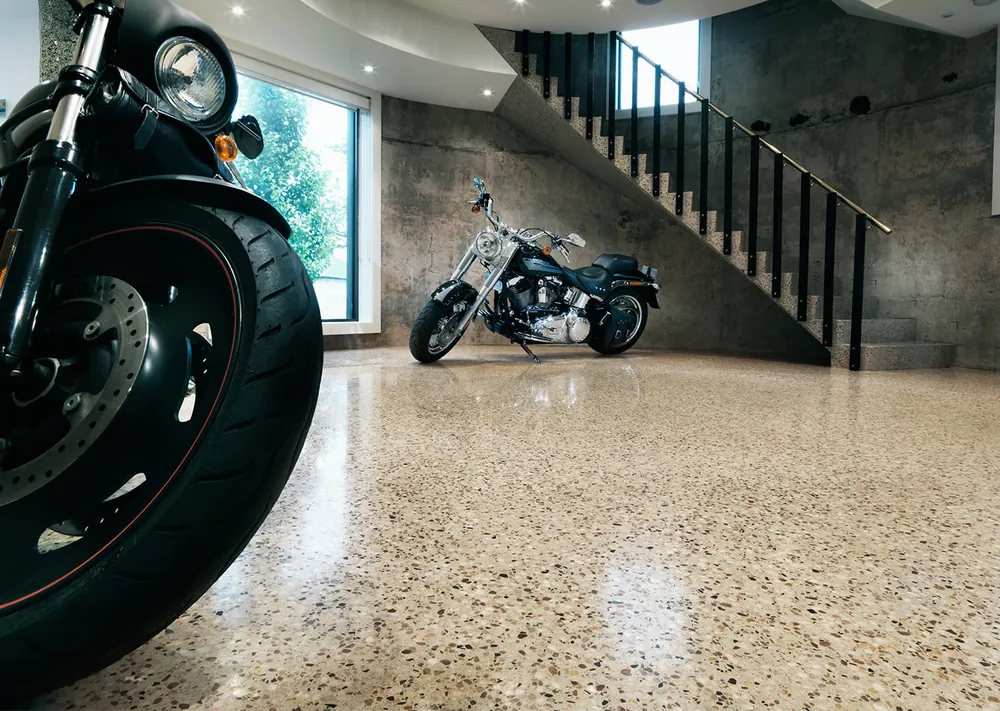
How Much Does Epoxy Flooring Cost in St. Petersburg? (2026 Guide)
Per-square-foot ranges by finish, and what a two-car bay actually totals.
Is Epoxy Flooring Worth It in St. Petersburg?
Where the money goes, and when it is not worth spending.
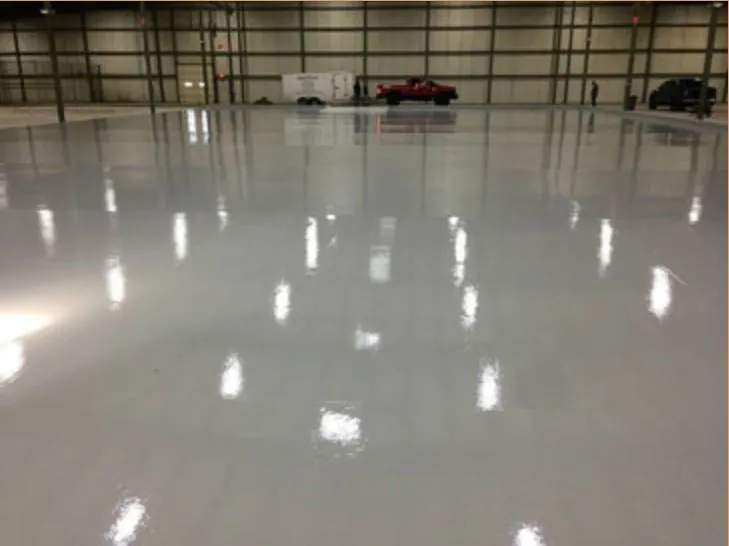
Commercial Epoxy Flooring in St. Petersburg
Picking a system for a kitchen, a clinic or a Pinellas shop floor.