Epoxy Floor Repair & Recoat in St. Petersburg — Fix the Cause, Not the Symptom
Bubbles the size of dinner plates on a garage slab. A shop floor lifting in sheets where the forklift turns. A kitchen coat that went soft and chalky in its second summer. Coatings do not fail at random — they fail at the bond line, and the reason is usually something nobody measured before the first coat went down. We test your slab, name the failure, repair the concrete, and recoat with a system the reading can actually support. Free assessments across Pinellas.
Coatings Don't Fail at Random
Almost every failed floor we look at failed in one of four ways, and up close they look nothing alike. Vapor blistering lifts in domes, and the underside of the flake is clean and chalky with no concrete stuck to it. A prep failure comes away in wide flexible sheets, the back of them still glassy from a slab that was never properly ground. Hot-tire lift shows up as rings exactly where a car parks. A worn topcoat does not lift at all — it dulls, ambers and thins in the traffic lane. Which of the four you have decides the entire repair, so nothing gets quoted until we know.
If moisture is the culprit, the only honest way to know is to measure it, and two tests matter. ASTM F1869, the calcium-chloride test, captures how much vapor leaves the surface over 24 hours. ASTM F2170 drills a probe into the slab and reads the relative humidity inside the concrete itself, which is the deeper and more reliable picture. One thing worth knowing before anyone quotes you off a plastic-sheet test: F1869 has not been valid on lightweight aggregate concrete since 2010. We run the numbers, we show them to you, and when they come back high the answer is a mitigation primer rated for that reading — not a thicker topcoat and optimism.
Then there is the part almost nobody mentions: what time of day your floor was coated. Mornings here are the wet half of the day. Relative humidity in St. Petersburg sits around 88% at 7 a.m. and does not slide toward the high 50s until late afternoon, while manufacturer data sheets cap application near 85% and every one of them repeats the same rule about keeping the surface at least 5 degrees above the dew point. Coat into a humid morning and you can get amine blush — a greasy haze that stops the next coat bonding at all. The sea breeze adds its own risk: the Gulf and Atlantic breezes collide somewhere over the peninsula, and on the days that line sets up over Pinellas a working window can close inside an hour. Scheduling is not a detail on this kind of work.
Storm water is its own category, and this city knows it. Helene set the highest water level ever recorded at the St. Petersburg tide gauge on 26 September 2024 — 6.31 feet above mean higher high water, in a gauge record that runs back to 1947 — and Milton then dropped 18.54 inches of rain on Albert Whitted in a single calendar day, the wettest day in that station's record since 1998. Shore Acres has flooded four times in four years. A slab that has been under water holds that water for weeks, and coating one that is still drying is the most reliable way to buy a second failure. We test, we wait for a number the system can live with, and sometimes the honest answer is not yet.
Read the full guide to moisture failures on St. Petersburg slabs →
Six Repairs, Each Aimed at a Different Failure
A blistered warehouse slab, a hot-tire ring in a Palm Harbor garage and a dulled kitchen floor are three different problems. We price them as three different jobs.
Diagnose first
Name the Failure First
Vapor blister, prep failure, hot-tire lift, or a topcoat that is simply worn out? The four look different up close and cost different amounts to put right. We identify which one you have before anything is ground, stripped or quoted.
How moisture failures actually start →ASTM
Mitigation Sized to the Reading
When F1869 or F2170 comes back high, a moisture-mitigation primer goes down before any coating does. It is the line item most often cut to win a bid, and it is the most common reason the same floor peels a second time.
Zoned
Warehouse & Shop-Floor Resurface
Pallet-jack ruts, forklift scuffing, lift creeping out from a floor drain — on a Pinellas Park or Largo shop floor we grind back only the failed zones and recoat with a system rated for that traffic and that temperature.
Fast
Hot-Tire Rings & Spot Repairs
Rings where the car sits, chips at the threshold, a cracked bay in a workshop. A local failure does not always mean a new floor — we cut out the area, repair it and blend the finish, for a fraction of a full recoat.
Scheduled
Maintenance Intervals for Working Floors
Kitchens, clinics, labs and tasting rooms have to stay sealed and washable. We set inspection and refresh-coat intervals around your hours, so wear gets caught while it is still a touch-up instead of a shutdown.
Recoat first
Resurface Before You Replace
Resurfacing a sound slab costs less and takes far less downtime than breaking out concrete and starting again. We tell you straight which one you are looking at — spot fix, full recoat, or strip and rebuild.
See full pricing guide →How a Repair Actually Runs
Five stages — and the first two both happen before anyone puts a price on the job.
The Walk-Through
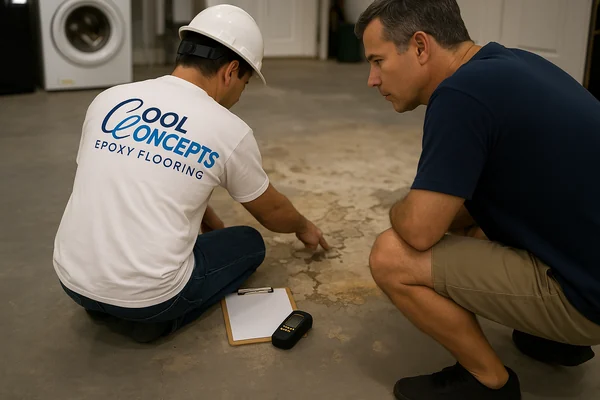
~45 minWe meet you at the floor anywhere in Pinellas, walk the failure with you, and mark where the coating is still bonded and where it is not. Sounding the slab and pulling a few tabs tells us more in twenty minutes than any photo can. No cost, no obligation. Schedule yours free.
Testing the Slab
1–2 hrsASTM F1869 calcium-chloride and ASTM F2170 in-situ RH tests go down alongside adhesion pulls and a solvent check on the old chemistry. That leaves us with a number for the slab and a name for the failure — vapor drive, a surface the coating never keyed into, the wrong topcoat for the traffic, or some combination of the three.
Strip and Profile
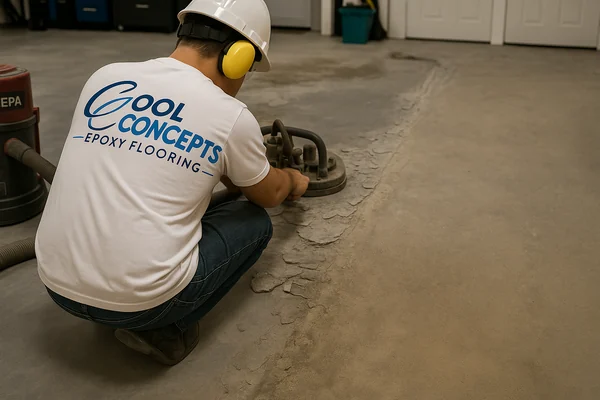
2–4 hrsDepending on what the tests said, we either diamond-grind the old system off entirely or profile and re-key what is still sound. Cracks get chased out and filled. If the moisture number calls for it, the mitigation primer goes down at this stage — onto bare, dry, profiled concrete and nothing else.
Patch, Prime, Coat
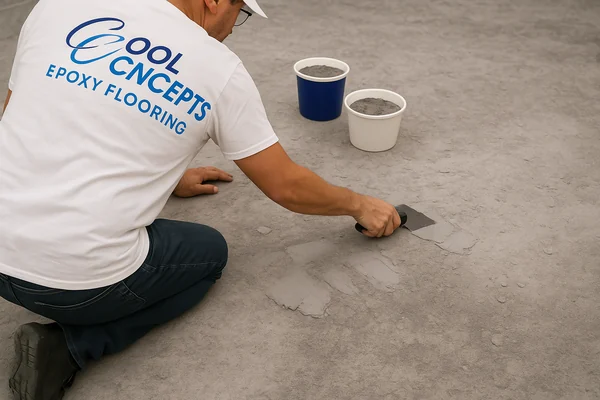
3–5 hrsGouges and spalls get patched, then the system matched to your slab's reading and its traffic goes on. We watch the psychrometrics while we work — surface at least 5 degrees above the dew point, humidity under the manufacturer's ceiling — which in practice means the coats go down in the drier back half of the day.
Cure and Hand-Off
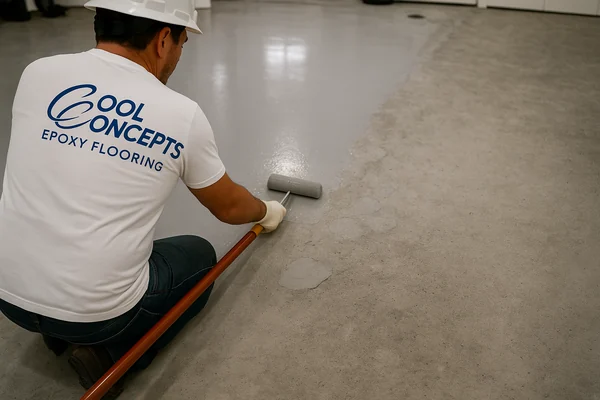
24–72 hrsCure gets scheduled rather than assumed: doors closed, air moving, nothing on the floor until the system is ready for it. Then we walk the finished floor with you and leave a plain-language care guide — what to clean it with, what to keep off it, and when a refresh coat is worth booking.
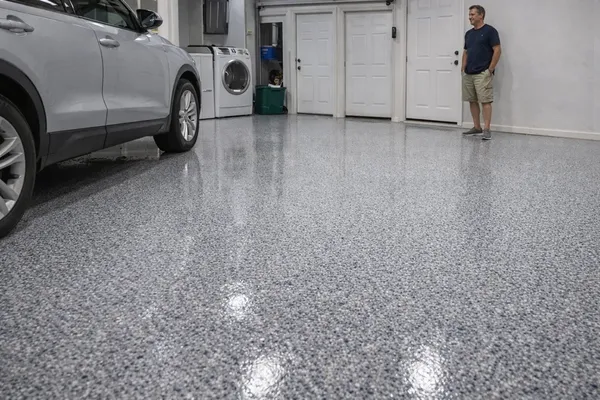
Start With the Diagnosis.
Book a visit anywhere in Pinellas. We'll tell you what the slab reads, why the last coating failed, and whether yours is a spot fix, a recoat, or a strip-and-rebuild.
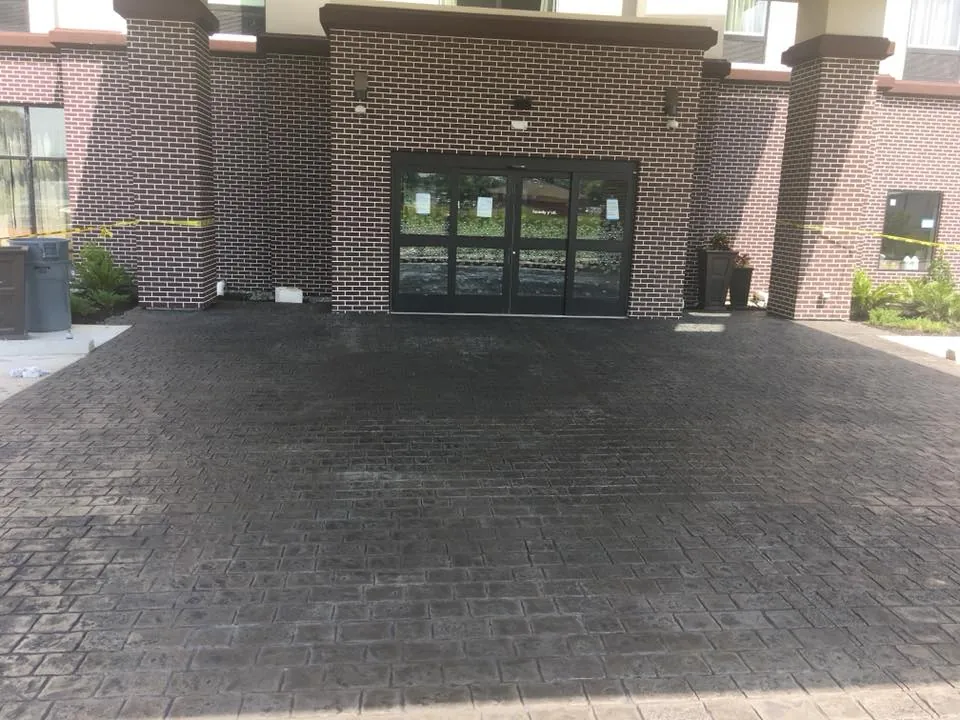
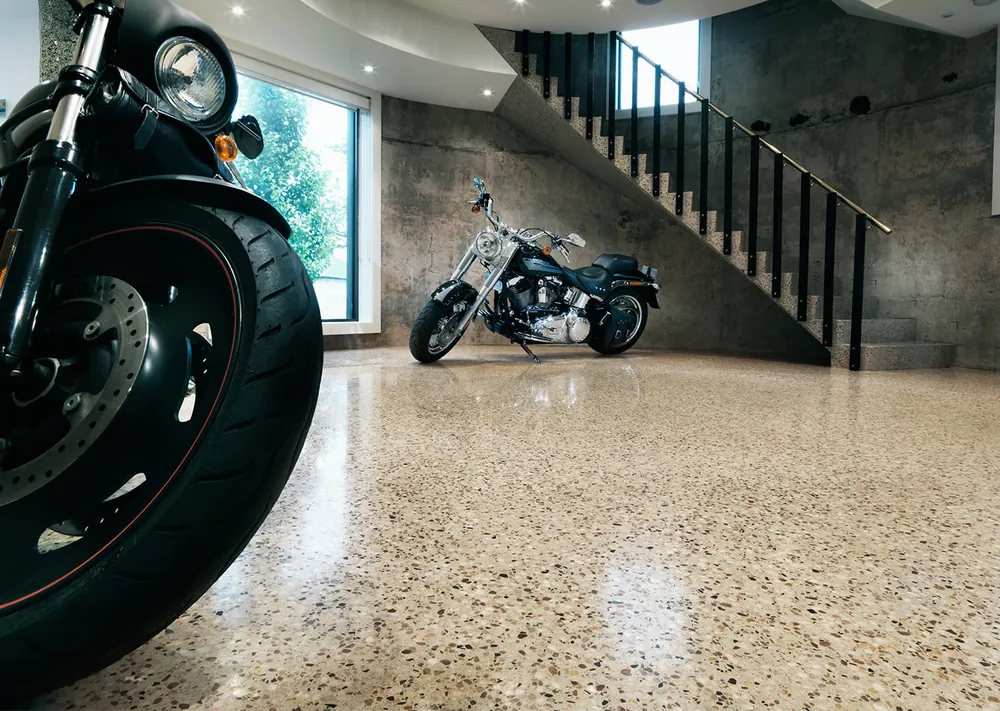
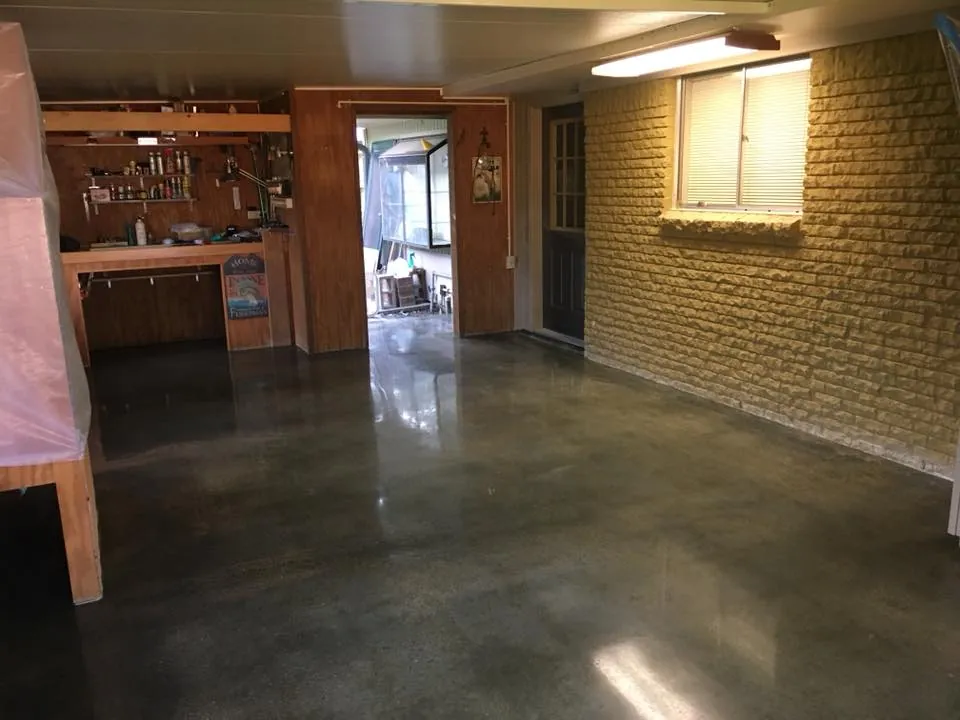
St. Petersburg Recoat & Resurface Jobs
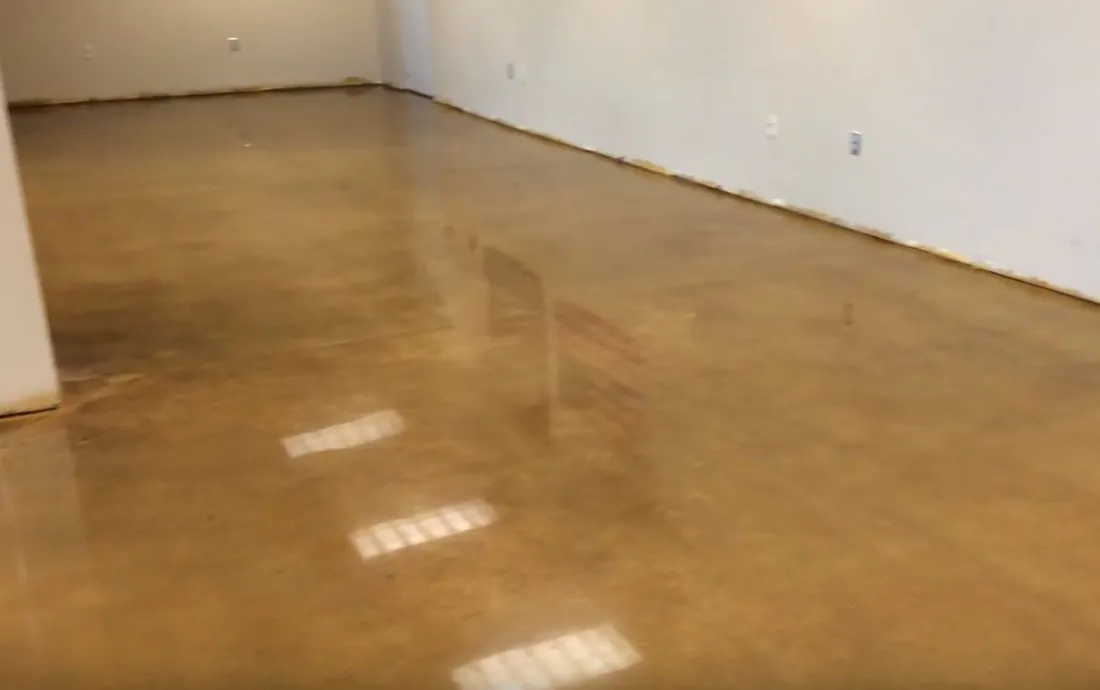
Before and after on floors that had already failed once.
Rated 5.0★ — St. Petersburg Reviews
Real reviews from real St. Petersburg homeowners.
"The work done to my garage was terrific - the technicians were punctual and the price was good. I'm really happy with how it turned out."
"I am really impressed with the quality of their work and their customer service. I see a lot of other companies in the same field, but none of them compare to them."
"Good people, clean work, fast delivery."
Epoxy Repair FAQs — St. Petersburg
The questions St. Petersburg owners ask after a floor lets go.
Peeling is a bond problem, and there are only a few ways a bond goes. If the underside of the flake is clean and chalky with no concrete attached, moisture came up through the slab and pushed the coating off. If the flake is flexible and its back is smooth and glossy, the concrete was never properly ground and the coating never keyed in. Rings under a parked car are hot-tire lift, which is a heat problem rather than a moisture one.
Two things make failure common here. Nobody tests — an ASTM F1869 or F2170 reading takes a day and gets skipped on most residential bids. And nobody watches the clock: morning relative humidity in St. Petersburg runs near 88% while manufacturers cap application around 85%, so a coat rolled at 8 a.m. can blush before it ever cures.
Sometimes. If the old system is still firmly bonded across most of the floor and the chemistry is compatible, we can abrade it, feather back the failed edges and build over the top. If it is delaminating, contaminated with oil or silicone, or was laid over a slab nobody ever tested, coating over it just buys the same failure a second time.
The tell is adhesion testing, not appearance — a floor can look perfect and still come away in your hand. We test first, and we tell you which one you have before we put a price on it.
Four things drive the price: how much of the floor has actually failed, whether the old system has to come off entirely, whether the moisture reading forces a mitigation primer, and the square footage. A spot repair on a few failed areas is a small fraction of a full recoat, and a full recoat is a small fraction of breaking out and replacing the slab.
We quote after the assessment, with a number written down for each option you have. See our St. Petersburg pricing guide for general ranges.
Yes, though not immediately. Helene set the highest water level ever recorded at the St. Petersburg tide gauge on 26 September 2024 — 6.31 feet above mean higher high water — and Shore Acres has flooded four times in four years, so this comes up a lot here. A slab that has been under water holds that water for weeks.
We probe it with in-situ RH testing under ASTM F2170, wait for a reading the coating system can live with, run mitigation where the number demands it, and only then coat. Coating a slab that is still drying is how a floor fails twice. If the honest answer is not yet, we say so.
Yes — inspection intervals, cleaning guidance, touch-ups on small damage, and a refresh-coat schedule set to how hard the floor actually gets used. A commercial kitchen line and a home garage are nowhere near the same clock.
The point of it is to catch a chip or a lifted edge while it is still a short visit. Water and grit get under a lifted edge, and that is how a small repair turns into a large one.
Design your epoxy floor in 60 seconds.
Pick your size, finish, and color. See a real preview and your St. Petersburg price range before you call.
Open Floor Studio →